
The Homeowner’s Guide to Air Duct Sealing, Repair, and Airflow Balance
Home »
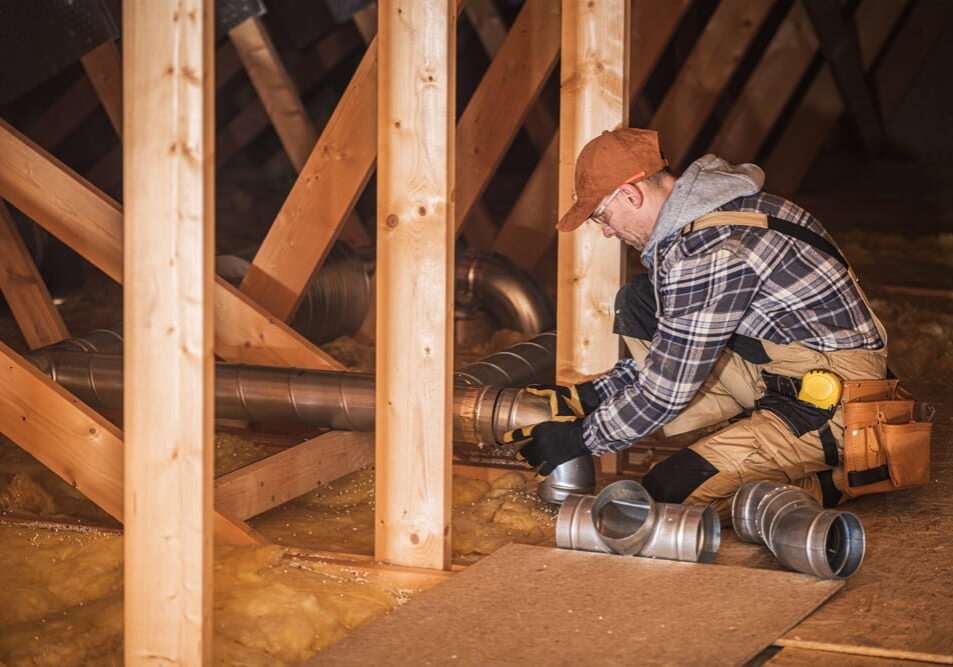
You set your thermostat to 72 degrees, yet your master bedroom in Shadow Creek Ranch feels like a sauna while your living room feels like a freezer. Your electric bill keeps climbing every summer, and no matter how often you dust, a fine gray film settles over your furniture within days. When a home suffers from uneven cooling and sky-high utility costs, most homeowners blame their air conditioner. They assume the compressor is failing or that they need a bigger unit. But after crawling through hundreds of attics across Brazoria County, we can tell you that the cooling unit itself is rarely the main culprit. The real problem usually sits hidden in your attic: a leaking, crushed, or unbalanced duct system.
At Big League Air, we see this every single day. Your air conditioner produces cold air, but your ductwork determines whether that air actually reaches your living space. If you want a comfortable, energy-efficient home, you need to understand how air duct sealing, duct repair, and airflow balancing work together to protect your comfort and your wallet.
When homeowners face chronic comfort issues, they often wonder if they should scrap their central system entirely and switch to ductless mini-splits. It is a fair question, but each system handles air distribution in fundamentally different ways. Central air conditioning systems rely on a single, centralized indoor unit, such as a furnace or air handler, connected to a network of supply and return ducts. The blower fan pulls warm air from your house through return grilles, forces it across a cooling coil, and pushes the chilled air through supply ducts into every room. The entire system relies on airtight pathways. If your ductwork has leaks, disconnects, or sharp kinks, your conditioned air escapes into your unconditioned attic before reaching your living space.
Ductless mini-split systems eliminate ductwork completely. Instead, an outdoor compressor connects to individual indoor air-handling units mounted on the walls of specific rooms. Each room unit cools and recirculates the air directly within that specific zone. While you avoid duct losses entirely, ductless systems require mounting visible units on your walls in every room. They also carry significantly higher upfront equipment and installation costs when outfitting an entire multi-room house.
For most existing houses in our area, a well-maintained central HVAC system is the most cost-effective and practical setup. You do not need to spend tens of thousands of dollars replacing a central air setup with multiple wall-mounted units just to get rid of hot spots. By investing in professional ductwork services in Pearland, TX, you fix the root cause, the air distribution network, allowing your central AC to perform as efficiently as a ductless setup without altering your home’s interior aesthetics.
Your attic endures extreme temperature swings. During peak summer months, attic temperatures easily climb past 130 degrees. When conditioned air at 55 degrees travels through metal or flexible ducts sitting in a 130-degree attic, those ducts face intense thermal stress. When ductwork cracks, disconnects, or sags, two distinct problems destroy your comfort and energy efficiency:
- Supply Leaks: Cool air blows straight into your attic. You pay to cool the outdoors while your bedrooms remain warm.
- Return Leaks: The blower fan pulls hot, humid, unfiltered attic air directly into your home’s air stream. This forces your AC to run longer cycles, drives up indoor humidity, and spreads attic dust through your supply vents.
Over time, this extra burden damages your cooling equipment. Your compressor works overtime to compensate for lost airflow, raising monthly energy bills and leading to premature system failures.
Most homeowners assume duct tape fixes duct leaks. In reality, standard duct tape fails quickly in attic environments; the heat breaks down the adhesive, causing the tape to peel away within months. At Big League Air, we use professional-grade sealing materials engineered to handle severe heat and humidity:
- Mastic Duct Sealant: A thick, flexible paste brushed directly over joints, seams, and metal connections. Mastic hardens into a durable, rubbery seal that expands and contracts with temperature changes without cracking.
- Foil-Backed Mastic Tape: A heavy-duty tape featuring a thick layer of mastic adhesive protected by a foil backing. We use this to reinforce larger mechanical joints and connections.
We systematically inspect and seal the primary leak sites in residential duct networks:
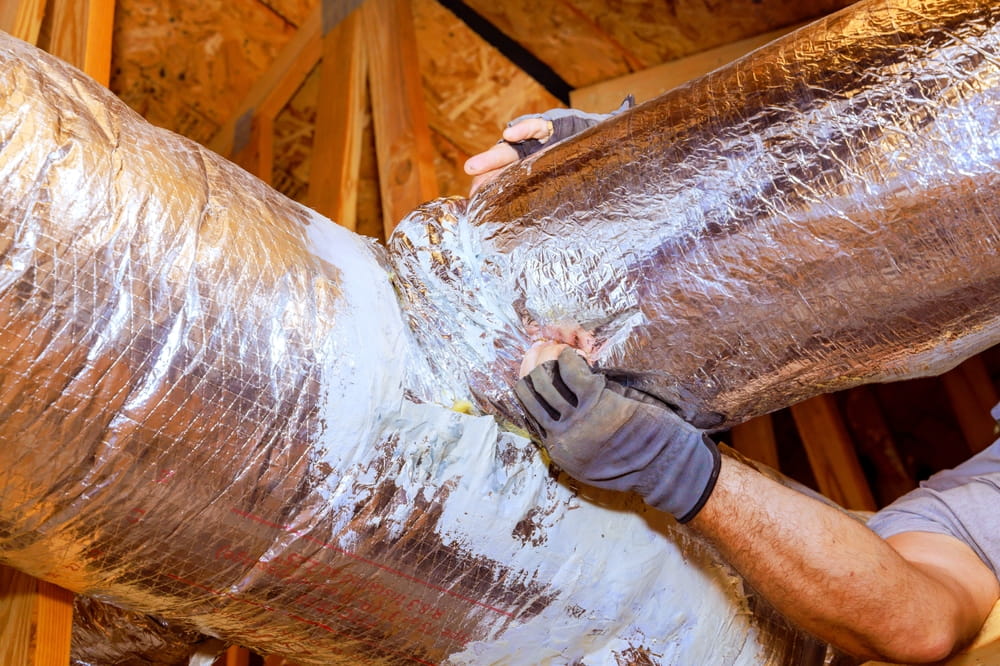
- Plenum Connections: The main junction boxes are attached directly to your indoor air handler. These connections experience the highest air pressure and frequently develop large gaps.
- Boot-to-Drywall Junctions: The space where the sheet metal vent boot meets your ceiling drywall. Unsealed boot connections draw warm air from floor cavities directly into your rooms.
- Branch Takeoffs: The round collar connections where individual supply pipes branch off from the main duct trunk.
- Flex Duct Joints: The connections where inner plastic liners meet metal connectors, often secured only with plastic zip ties that loosen over time.
- Return Air Boxes: The framing underneath your air filter grilles, which often pulls unconditioned air from wall cavities if unsealed.
Sealing leaks is only part of the equation. If your duct runs are physically crushed, undersized, or stripped of insulation, air cannot flow efficiently. Flexible ductwork is common in modern home construction, but it is easily damaged. Workers stepping through attics can crush flex lines, while improper suspension can cause ducts to sag. A 90-degree kink in a flexible duct starves that room of airflow just like a kinked garden hose stops water. During a professional duct repair, we lift sagging lines, straighten pinched flex runs, secure loose connections with mechanical clamps, and replace damaged duct sections to restore full interior volume.
In high-humidity climates, uninsulated or poorly insulated ducts present a major hazard. When 55-degree air passes through a duct surrounded by muggy, 90-degree air, moisture condenses on the outside of the duct run. This condensation drips onto ceiling drywall, creating water stains, rot, and potential mold growth. Installing proper duct insulation solves this issue entirely. We install high-grade duct insulation, such as R-8 insulated flexible ducts or thick, foil-backed fiberglass wraps around sheet metal trunk lines, to stop thermal transfer, prevent sweat damage, and maintain cold air temperatures all the way to your registers.
Repairing individual sections works well for minor damage, but older duct systems eventually reach the end of their useful service life. You should consider a complete duct replacement if your home features:
- Gray Polybutylene/Flex Ducts: Installed frequently in the 1970s and 1980s, the outer plastic liner on these ducts breaks down and crumbles into dust over time.
- Severe Mold or Rodent Damage: Contamination inside fiberglass-lined ductwork cannot be cleaned effectively and requires physical removal.
- Severely Undersized Duct Systems: If an older system was sized improperly, no amount of sealing will fix restricted airflow. Installing properly sized ductwork restores proper balance and system design.
Whenever new duct runs are needed, precise duct installation ensures correct sizing, short and direct runs, and secure mechanical fastenings that keep air moving quietly throughout your layout.
Even an airtight, well-insulated duct system can produce uneven room temperatures if the air distribution is unbalanced. Airflow balancing adjusts the volume of air delivered to each room so your entire house cools evenly. Your furnace or air handler blower is engineered to operate against a specific amount of resistance, measured as total external static pressure.
- If static pressure is too high (caused by undersized ducts, crushed lines, or restrictive filters), the blower motor strains, overheats, and delivers less air to distant rooms.
- If static pressure is too low (caused by large disconnects or oversized trunks), air velocity drops, and air trickles out of vents instead of mixing properly into the room.
To balance a residential duct system, our technicians perform three precise steps:
- Airflow Diagnostics: We measure the actual volume of air flowing out of every supply register using an airflow hood (measured in cubic feet per minute, or CFM).
- Damper Adjustment: We adjust manual balancing dampers located at the branch connections on your main duct trunk line. By dampening airflow to rooms that get too much air, we redirect pressure to distant rooms that need more cooling.
- Return Air Optimization: We verify that your return ducting pulls enough air out of bedrooms to prevent positive pressure build-up, which can block cold supply air from entering closed rooms.
Fixing hidden ductwork issues requires honest diagnostics, clear communication, and skilled craftsmanship. At Big League Air, we run our business on a foundational principle: God. Family. HVAC. As a locally owned and operated, family-owned business, our familial, faith-based, core values guide how we treat every customer. We operate as a God-fearing, God-led, spirit-filled company that brings integrity, transparency, and care into your home.
When you choose our team for faith-based HVAC services, you get a contractor committed to long-term solutions rather than quick, temporary fixes:
- Google 5-Star Rated: Proven quality backed by consistent, outstanding feedback from local homeowners.
- Workmanship Guarantee: We stand firmly behind our technical repairs and installations.
- Fast and Reliable Service: Fast response times when you face heating or cooling problems.
- Flexible GreenSky Financing: Flexible financing options designed to fit your family’s budget.
- Comprehensive Warranties: Long-term warranty protection covering both equipment and labor.
- Maintenance Memberships: Preventive plans designed to keep your system clean, sealed, and balanced year after year.
Frequently Asked Questions
- How do I know if my ductwork needs sealing or repair? Common signs include uneven room temperatures, rising electric bills, dusty vent covers, and high indoor humidity levels during warm months.
- How long does professional duct sealing and airflow balancing take? Most standard residential duct sealing and balancing projects take our technicians between 4 and 8 hours to complete.
- Will sealing my ductwork lower my monthly electric bill? Yes, sealing leaky ductwork can reduce conditioned air loss, improve system efficiency, and potentially lower cooling costs by reducing unnecessary system run time.
- What is the difference between duct sealing and duct balancing? Duct sealing closes physical holes and cracks to stop air leaks, while duct balancing adjusts dampers inside the ducts to distribute airflow evenly to every room.
Take Control of Your Home’s Comfort Today
A comfortable home depends on more than just a running air conditioner. If hot spots, high utility bills, and dust problems are making your house uncomfortable, leaky or unbalanced ductwork is likely the cause. You do not have to accept uneven cooling or waste money cooling your attic space. Restoring performance starts with a complete evaluation of your air distribution system. Whether you need targeted sealing, localized repairs, or a complete system rebalance, our team brings expert diagnostics and honest craftsmanship to every job. Contact Big League Air today to schedule your comprehensive airflow evaluation, explore our flexible GreenSky financing options, and experience the difference our faith-based service makes for your family.