
Why Smart Thermostats Misread Temperature When Installed Near Drafty Entryways
Home »
Is Your Heater Short-Cycling, or Is It Just a Draft?
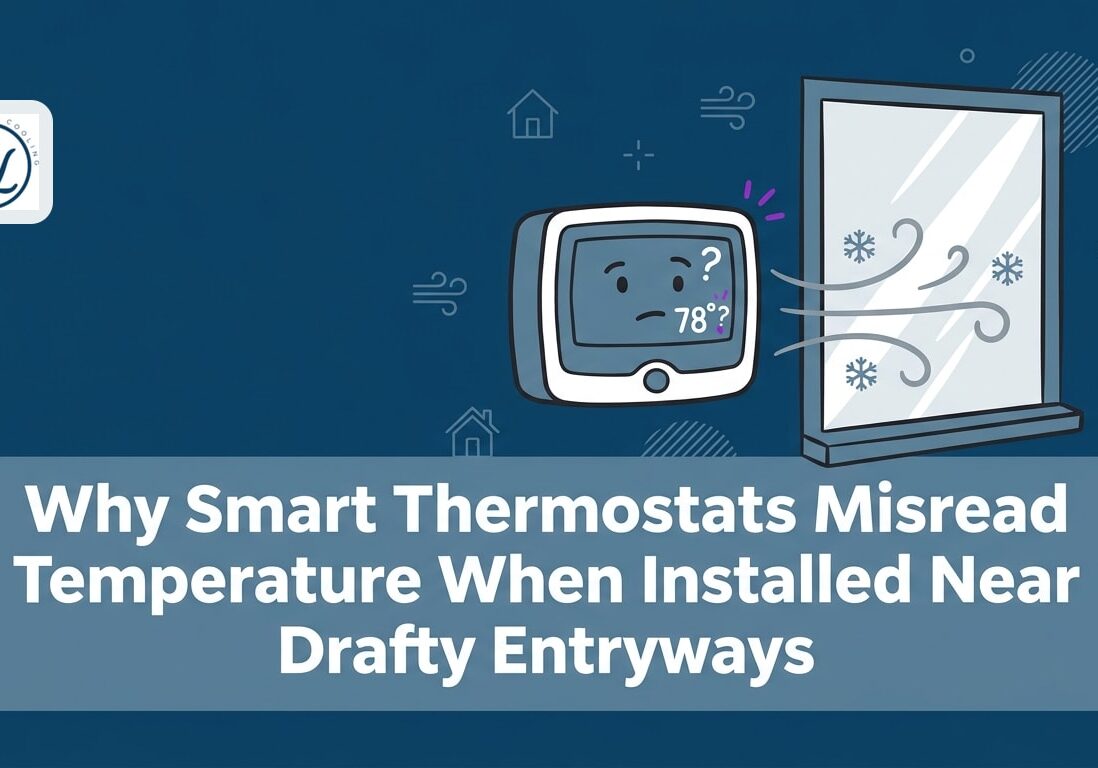
Your furnace is running for just a few minutes, shutting down abruptly, and then firing right back up—a frustrating sequence that perfectly explains why smart thermostats misread temperature when installed near drafty entryways. As November pre-winter temperature drops begin to settle in across Missouri City, many homeowners notice this rapid on-and-off behavior and immediately panic. At Big League Heating And Cooling, our team often fields calls from customers whose first thought is that a major mechanical failure has occurred inside the furnace or heat pump. You might assume the blower motor is failing or the control board has shorted out.
However, the reality we see in the field is often much less catastrophic. In many cases, a perfectly functioning heating system will short-cycle simply because the thermostat is poorly placed. When a sensitive temperature sensor sits too close to a front door or a leaky window, it reacts to localized gusts of cold air rather than the actual ambient temperature of your living space. This creates a confusing situation where your heater works overtime to warm a single drafty square foot of your home, leaving the rest of the house unbalanced and your equipment strained.
Need immediate assistance? If you are experiencing issues with your HVAC system or want to explore professional thermostat services to correct placement issues, our diagnostic team is ready to help.
How Unconditioned Air Tricks Highly Sensitive Smart Thermostats
To understand why a simple draft causes such major operational issues, you have to look at the technology inside your device. Older, traditional thermostats operated using a small vial of mercury and a bimetallic coil. As the room temperature changed, the metal coil would slowly expand or contract, eventually tipping the mercury vial to close an electrical circuit and turn on the heater. Because this physical process was relatively slow, older thermostats naturally ignored brief gusts of cold air. They required a sustained temperature drop to activate.
Modern smart thermostats operate on entirely different technology. Instead of physical coils and mercury, they use highly advanced electronic sensors called thermistors. A thermistor is a type of resistor whose electrical resistance changes instantly with temperature. These digital sensors are incredibly precise, often detecting temperature fluctuations as small as a fraction of a degree.
While this precision is excellent for energy efficiency and tight climate control, it becomes a massive liability if the thermostat is mounted in the wrong place. When a front door opens, a sudden gust of unconditioned air washes directly over the thermistor. The sensor immediately registers a drastic temperature drop. False low temperature readings caused by front door drafts trick the smart thermostat into believing the entire house is freezing, prompting it to fire up the heating system immediately.
If you notice your system behaving erratically even when the house feels comfortable, it is one of the key signs your thermostat needs immediate professional repair or relocation.
| Feature | Older Mechanical Thermostats | Modern Smart Thermostats |
|---|---|---|
| Sensor Type | Bimetallic coil and mercury switch | Digital electronic thermistor |
| Reaction Time | Slow; requires sustained temperature change | Instantaneous; reacts to minor fluctuations |
| Draft Sensitivity | Low; naturally ignores brief breezes | Extremely High; registers micro-drafts immediately |
| Placement Needs | Forgiving, though central placement is preferred | Strict; must be isolated from all environmental interference |
Identifying Thermal Dead-Zones in Your Home’s Entryway
A “thermal dead-zone” is a specific area inside your home where the air circulation is poor or heavily influenced by external factors rather than your HVAC system’s return and supply vents. Entryways are notorious for becoming thermal dead-zones. Because front doors are constantly opening and closing, the indoor air in that small radius never has a chance to stabilize. Even when the door is closed, unsealed gaps around the frame or under the threshold allow continuous micro-drafts to seep inside.
With our Gulf Coast region’s occasionally chilly winter days, sudden bursts of unconditioned air from an entryway clash heavily with the home’s ambient heat. In our years of keeping Missouri City homes comfortable and reliable for the holiday season, the Big League Heating And Cooling team has found that this severe temperature difference easily exposes these dead-zones. If your thermostat is mounted in this volatile airspace, it is constantly battling the outdoor weather rather than reading the indoor climate.
Here is what to look for when identifying a thermal dead-zone near your entryway:
- Temperature swings: The hallway feels noticeably colder than the living room during late fall and winter.
- Constant micro-drafts: You can feel a slight breeze on the back of your hand when holding it near the door frame or the thermostat itself.
- Lack of return vents: There is no large return air grille nearby to pull the stagnant air back into the HVAC system for conditioning.
- Frequent foot traffic: The door opens multiple times an hour, constantly resetting the local air temperature.
The Department of Energy strictly recommends installing thermostats on interior walls away from natural drafts, direct sunlight, and exterior doors. Keeping the sensor in a stable, centrally located hallway ensures it reads the true average temperature of your home.
Why False Temperature Readings Lead to HVAC Short-Cycling
When false low temperature readings caused by front door drafts trick your thermostat, the resulting behavior is known as short-cycling. This is one of the most damaging conditions your heating system can endure. A furnace or heat pump is designed to run in long, steady cycles to evenly distribute heat and maximize energy efficiency. When drafts interfere, that steady cycle is broken.
Here is the exact sequence of how a draft causes short-cycling:
- The Draft Hits: Someone opens the front door, or a strong winter wind pushes cold air through the weatherstripping directly onto the thermostat.
- The False Reading: The hyper-sensitive thermistor registers a sudden 5-degree drop and immediately commands the heater to turn on.
- Rapid Local Warming: The heating system fires up and pushes warm air into the house. Because the thermostat is in a small entryway, that specific area warms up very quickly once the door is closed.
- Premature Shutoff: The thermostat senses the target temperature has been reached and shuts the system down before the rest of the house is adequately heated.
- The Cycle Repeats: Minutes later, another draft hits the sensor, and the entire stressful process starts over again.
This rapid on-and-off sequence places immense mechanical stress on your HVAC equipment. The blower motor draws the most electricity and endures the most wear during startup. Forcing it to start and stop constantly degrades the motor bearings and drains the electrical capacitors prematurely. In a gas furnace, the heat exchanger undergoes rapid thermal expansion and contraction, which can eventually lead to dangerous cracks. Furthermore, because the system never completes a full heating cycle, your energy efficiency plummets, driving up your monthly utility bills.
If you suspect your system is caught in this loop, professional system diagnostics and testing can confirm whether the issue is environmental or mechanical.

Diagnostic Expertise: Separating Placement Issues From Equipment Failure
Hearing your furnace struggle through short cycles is stressful, and the psychological relief of learning that a suspected major failure is just a placement issue cannot be overstated. This is where professional diagnostic expertise becomes critical. At Big League Heating And Cooling, our goal is to expertly diagnose root causes like poor thermostat placement to save homeowners money, rather than just selling new equipment you do not actually need.
A thorough professional assessment involves much more than just looking at the thermostat screen. Technicians will evaluate the entire environmental context of the control unit. We measure the airflow around the entryway, check the calibration of the sensors, and inspect the wall placement. Sometimes, the draft isn’t even coming from the door—it is coming from unsealed holes behind the drywall where the thermostat wires pass through.
Many homeowners attempt to solve this issue by diving into their smart thermostat’s settings and trying to recalibrate the temperature offset. While recalibration is a useful feature for minor discrepancies, it will not solve the problem if the physical location remains in the path of a volatile draft. You cannot program a thermostat to ignore sudden blasts of freezing air. Ruling out simple environmental factors before recommending expensive mechanical repairs ensures your heating system operates exactly as it was designed to.
Addressing Environmental Interference Around the Thermostat
Once a professional confirms that environmental interference is the root cause of your short-cycling, there are specific steps to resolve it. The first line of defense is always improving the thermal envelope of the entryway itself. This means identifying and sealing drafts using high-quality weatherstripping around the door frame and installing heavy-duty door sweeps at the threshold. Upgrading the insulation around the door can significantly reduce the ambient drafts that seep in when the door is closed.
However, sealing drafts is often only a partial solution. If you want to dive deeper into how your home loses heat, a home energy audit can pinpoint exactly where unconditioned air is infiltrating your living space.
The Limits of Draft Sealing
While weatherstripping helps tremendously with energy efficiency, it has limits. Opening the front door to leave for work or check the mail still introduces a massive volume of cold air into the space. If the thermostat unit is mounted too close to the door, that sudden gust will still trigger a false reading. In these cases, relocation is ultimately required to achieve accurate, stable temperature control.
The Relocation Process
Moving a thermostat is not as simple as taking a picture off one wall and hanging it on another. Professionals must find an optimal interior hallway or central living space that represents the true temperature of the home. The new location must be completely free from direct sunlight, supply air vents, return grilles, and hidden plumbing pipes that radiate heat or cold.
Because modern smart thermostats require a continuous power supply—often through a dedicated “C-wire” or common wire—the relocation process involves complex low-voltage electrical work. Technicians must safely disconnect the unit, reroute the multi-strand thermostat wire behind the drywall or through the attic, patch the old location, and ensure there is no electrical interference in the new wall cavity. Crossing wires at the furnace control board can instantly short out the system’s transformer, which is why you must rely on a licensed professional for this relocation rather than attempting it yourself.
Protect Your Heating System: Why Smart Thermostats Misread Temperature When Installed Near Drafty Entryways
Understanding the connection between your entryway’s climate and your heating system’s behavior is the key to maintaining a comfortable, efficient home this winter. By recognizing how highly sensitive sensors react to unconditioned air, you can stop short-cycling before it causes permanent mechanical damage to your furnace or heat pump. If you need expert guidance on moving your control unit to an optimal location, professional thermostat services provide a safe, lasting solution that ensures your system reads the true temperature of your home.
Frequently Asked Questions
Can a drafty door cause my heater to short-cycle?
Yes, a drafty door can absolutely cause your heater to short-cycle. When cold air blows across a thermostat located near the entryway, the sensor registers a false low temperature and turns the heater on prematurely. Once the small area warms up, it shuts off quickly, repeating the damaging cycle endlessly.
Why is my smart thermostat reading the wrong temperature?
Your smart thermostat is likely reading the wrong temperature because it is exposed to environmental interference. Direct sunlight, nearby air vents, or drafts from exterior doors can artificially raise or lower the temperature immediately surrounding the sensor. This localized reading does not reflect the actual comfort level of the rest of your house.
How do drafts affect thermostat sensors?
Drafts affect thermostat sensors by rapidly changing the temperature of the air directly touching the internal thermistor. Modern digital sensors are incredibly precise and react instantly to fractions of a degree. A sudden gust of cold air makes the sensor believe the entire home’s temperature has plummeted.
Where is the worst place to put a thermostat?
The worst place to put a thermostat is near an exterior door, above an air vent, or in direct sunlight. These locations are considered thermal dead-zones or highly volatile areas where the air temperature fluctuates wildly. Installing a thermostat here guarantees inaccurate readings and poor HVAC performance.
How do professionals safely relocate a hardwired smart thermostat?
Professionals safely relocate a hardwired smart thermostat by first disconnecting the power at the furnace control board to prevent electrical shorts. They then identify a stable interior wall, carefully fish new multi-strand thermostat wiring through the wall cavities or attic, and securely mount and calibrate the unit in its new location.