
Why Opening Windows in Missouri City Fall Weather Worsens Indoor Allergies
Home »
The Hidden Consequence of Fall Breezes on Your Health
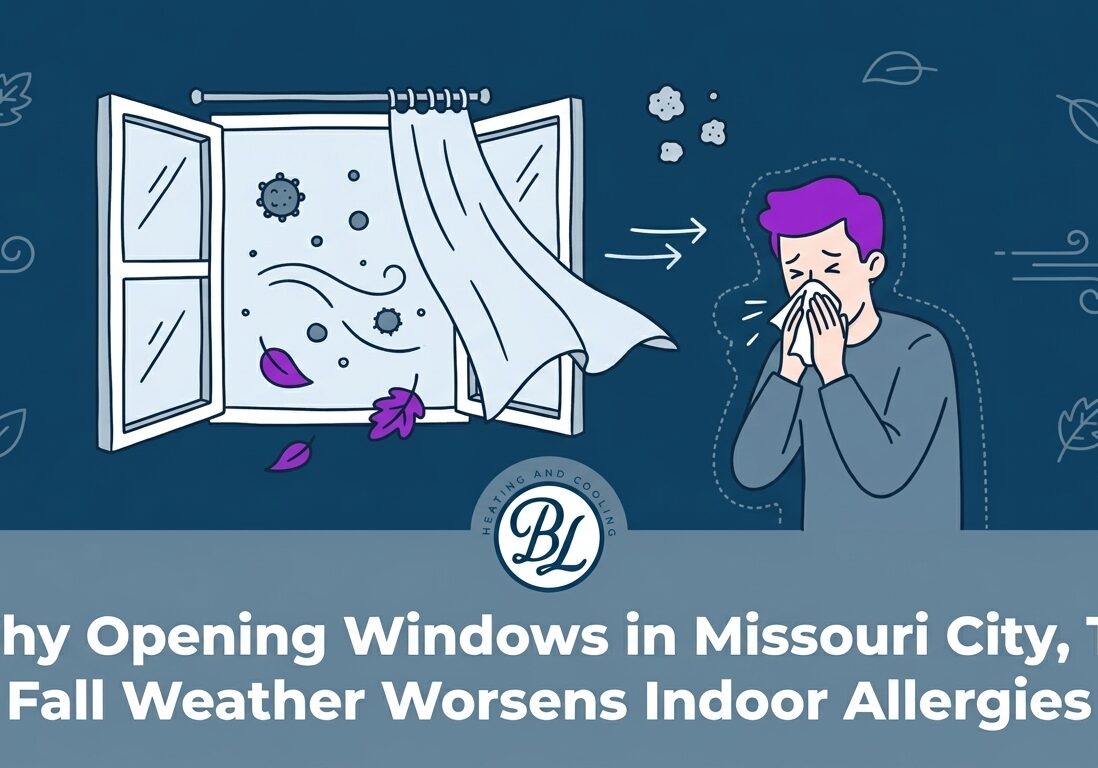
October finally brings a welcome shift to the Texas Gulf Coast, but understanding exactly why opening windows in Missouri City fall weather worsens indoor allergies is critical before you turn off your air conditioner to let the breeze in. After months of running the system nonstop, the instinct to open every window in the house is almost universal. The air outside feels cooler, the evenings are pleasant, and letting the breeze flow through your living room feels like the perfect way to welcome the changing season. However, this simple act often triggers an unexpected and frustrating problem for homeowners: sudden, severe allergy flare-ups occurring entirely indoors, despite the milder weather outside.
If you find yourself sneezing, coughing, or waking up with congestion just as the heat breaks, you are facing a critical decision point. You have to balance the strong desire for natural fresh air against your home’s need for mechanical filtration. When you shut off your central air system and open the glass, you are completely bypassing the primary defense mechanism your house uses to capture and remove airborne irritants. Understanding how this sudden influx of unfiltered air impacts your overall indoor air quality is the first step toward enjoying the seasonal shift without sacrificing your respiratory health or your daily comfort.
During transitional October fall weather, the outdoor air carries a massive payload of microscopic triggers. By relying on open windows, you allow these invisible invaders free rein to drift through your living spaces, settle onto your furniture, and embed themselves into your carpets, turning your comfortable sanctuary into a concentrated holding zone for seasonal allergens.
Understanding the Physics of HVAC Airflow and Filtration
To grasp why open windows compromise your home’s air, you first need to understand the concept of the building envelope. Your home is designed to operate as a sealed, controlled environment. Within this closed envelope, your heating, ventilation, and air conditioning (HVAC) system regulates not just temperature, but the actual physical movement of the air itself. Mechanical HVAC filtration relies entirely on this closed system to force air through the dense media of your air filters.
When the system is running in a sealed home, the blower motor creates a continuous cycle. It pulls stale air out of your rooms through the return vents, forces it through the physical barrier of the air filter where particulates are trapped, and pushes the newly cleaned air back into your living spaces through the supply vents. This constant, pressurized loop is what keeps the particulate matter concentration in your home low.
The moment you open a window, you instantly disable these carefully balanced pressure dynamics. Without the boundary of a closed envelope, the forced pressure drops. The air no longer takes the intended route through your return ducts and filters. Instead, it simply drifts lazily through the open windows, carrying a full load of outdoor pollutants directly into your rooms.
How Pressure Dynamics Drive Air Purification
Air always takes the path of least resistance. In a closed home, the only path available is through the return vents and the filter. This requires specific static pressure—the resistance to airflow within the ductwork—to function correctly. Your blower motor is calibrated to overcome this resistance and push air through the tightly woven fibers of your filter.
When a window is open, the path of least resistance is no longer through the dense filter media; it is straight through the open room. Even if your HVAC fan is running, the open window acts as a massive pressure leak. The system cannot build enough static pressure to effectively pull the newly introduced outdoor air into the return vents. As a result, the natural breeze simply deposits its payload of dust, pollen, and spores across your floors and countertops, leaving your mechanical filtration system completely ineffective.

Why Missouri City’s Climate Amplifies Fall Allergens
The Problem: The physics of airflow bypass become significantly more problematic when you factor in the unique environmental characteristics of the Texas Gulf Coast. Unlike northern climates where autumn brings crisp, dry air that naturally suppresses biological growth, the greater Houston area experiences prolonged warmth and high moisture well into the later months of the year.
The Cause: Missouri City’s specific transitional October fall weather introduces dense, moisture-heavy air that promotes indoor mold and dust mite growth alongside peak ragweed pollen. Because our growing season is exceptionally long, plants continue to pollinate long after other regions have experienced their first freeze. Ragweed, one of the most aggressive seasonal allergens, thrives in this environment. Furthermore, the heavy, humid air acts as a perfect transport mechanism, holding onto mold spores and botanical particulates and carrying them directly through your window screens.
The Solution: At Big League Air LLC, our team typically sees a massive spike in service calls regarding indoor air quality during this exact time of year. In our experience servicing Gulf Coast homes, we’ve learned that managing indoor air quality here requires a proactive approach to weather physics. Because our transitional air is so laden with both moisture and particulates, relying on natural ventilation is inherently risky for allergy sufferers. The most effective strategy is to recognize that Missouri City’s “mild” weather is actually a peak period for airborne irritants, requiring you to keep the building envelope sealed and allow your mechanical systems to scrub the air continuously.
The Trapping Effect: When You Close the Windows
The true consequence of opening your windows often doesn’t reveal itself until you finally shut them. The sequence of events is highly predictable: the windows open, a massive volume of unfiltered allergens enter the home, and eventually, the temperature rises or falls enough that you close the windows and turn the HVAC system back on. What you have just done is bypass your filtration to let the invaders in, and then re-sealed the building envelope to trap them inside.
Once the house is closed up, it becomes an allergen trap. The sudden spike in indoor humidity and particulate matter concentration does not simply vanish when the AC kicks back on. This is because gravity acts faster than your HVAC system. By the time you close the windows, a significant portion of the pollen, dust, and mold spores have already settled out of the air.
Settled particulates are notoriously difficult for an HVAC system to remove. Once dust and pollen adhere to your upholstery, sink into your carpets, or rest on your bookshelves, the static pressure of the return vents is rarely strong enough to lift them back into the air stream. They remain in your living space, getting kicked up every time you walk across the rug or sit on the sofa, causing continuous allergic reactions.
| Particulate Type | Behavior in Open Window Drafts | Behavior Once Windows are Closed |
|---|---|---|
| Ragweed Pollen | Carried easily on humid breezes deep into the home. | Settles rapidly onto fabrics; requires physical vacuuming to remove. |
| Mold Spores | Rides on moisture-dense air; seeks damp, cool surfaces. | Embeds in porous materials; begins colonizing if humidity remains high. |
| Dust Mites | Thrives as outdoor humidity floods the indoor environment. | Multiplies rapidly in carpets and bedding due to trapped moisture. |
Even for the particles that remain airborne, there is a significant delay between closing the windows and the HVAC system’s ability to filter the air. It takes multiple complete cycles of the home’s total air volume passing through the filter to significantly reduce the particulate load, meaning you will continue to breathe contaminated air for hours after the windows are shut.
The Moisture Factor: How Humidity Feeds Indoor Triggers
The Problem: When you open your windows during the fall, you aren’t just letting in solid particles like pollen; you are also inviting unregulated Gulf Coast humidity to saturate your indoor air and building materials.
The Cause: The Environmental Protection Agency (EPA) clearly outlines that indoor humidity levels above 50% rapidly accelerate the growth of biological pollutants. When your air conditioner is running, it naturally dehumidifies the air as a byproduct of the cooling process. When you turn the system off and open the windows, you lose this critical mechanical dehumidification. The indoor humidity quickly matches the outdoor humidity, which in Missouri City frequently exceeds 70% even on mild fall days. This rapid spike in indoor humidity and particulate matter concentration creates an ideal, damp breeding ground for dust mites in your bedding and mold spores in your bathrooms and kitchens.
The Solution: To combat this, you must maintain control over the moisture levels inside your home, regardless of the temperature outside. If you prefer to keep the AC off during milder weather, you need alternative humidity control solutions, such as a whole-home dehumidifier. These systems operate independently of your cooling cycle, pulling excess moisture out of the air and keeping the relative humidity below the 50% threshold, effectively starving dust mites and mold of the water they need to survive.
The Impact of Unfiltered Air on Your Ventilation System
Allowing unfiltered, humid air to drift through your home doesn’t just affect the rooms you live in; it has a profound, compounding effect on your ductwork and the internal components of your HVAC equipment. When the weather inevitably shifts and you turn your system back on, the blower motor must suddenly process the massive load of particulates that have become trapped inside the home.
As the system pulls this heavily contaminated air into the return vents, your air filter takes an immediate beating. During our pre-winter heating-startup inspections, our technicians frequently pull out filters that are completely caked with October ragweed. It can clog much faster than usual, restricting airflow and forcing the blower motor to work harder, which drives up energy consumption. Worse, if the filter is slightly misaligned or of a lower quality, a large percentage of those particulates will bypass the filter entirely and enter the ductwork.
This creates one of the most common ductwork problems homeowners face. The high indoor humidity and particulate matter concentration combine inside the dark, cool environment of your ventilation system to create a sticky, sludge-like buildup on the walls of the ducts and the delicate fins of the evaporator coil. Over time, this buildup restricts airflow, drastically reduces the long-term efficiency of the system, and turns your ductwork into a secondary source of indoor air pollution. Emphasizing the importance of maintaining clean pathways for air to travel is vital; once the system resumes normal operation, it should be distributing clean air, not pushing air over a layer of damp dust.
Strategies for Fresh Air Without Compromising Filtration
It is entirely possible to manage transitional October fall weather without turning your home into an allergy trap. By following scientifically-grounded advice, you can maintain excellent air quality while still ensuring your home doesn’t feel stuffy. Here are the most effective strategies for managing fall weather:
- Keep windows closed during peak pollen times: Ragweed and other fall plants typically release their pollen in the mid-morning, and it peaks by early afternoon. If you must open a window for a cross-breeze, do it very early in the morning or late in the evening when pollen counts are slightly lower, though keeping them closed entirely is always the safest option for severe allergy sufferers.
- Utilize your HVAC fan setting: Instead of opening a window to alleviate stuffiness, switch your thermostat fan setting from “Auto” to “On.” This forces the system to continuously circulate the air inside your home through the filtration media, ensuring the air is constantly being scrubbed of particulates without running the energy-intensive cooling compressor.
- Invest in mechanical ventilation: Modern HVAC technology offers Energy Recovery Ventilators (ERVs) and Heat Recovery Ventilators (HRVs). These systems actively pull fresh outdoor air into the home, but they route it through a dedicated filter and exchange heat and moisture with the outgoing stale air. This gives you genuine fresh air that is pre-filtered and dehumidified.
- Prepare your core equipment: Transitional weather puts unique loads on your system, as it may switch between heating and cooling over a single weekend. Ensuring your equipment is clean, calibrated, and equipped with a fresh, high-MERV filter is critical. Scheduling a pre-winter inspection or routine air conditioning maintenance ensures the blower motor can handle the static pressure required to filter out heavy fall allergens.
Taking Control of Your Home’s Climate and Comfort
Understanding the physics of your home’s airflow is the critical first step to conquering fall allergies. When you realize that opening a window disables the very pressure dynamics designed to protect your lungs, the sudden October allergy flare-ups make perfect scientific sense. The dense, moisture-heavy air of the Gulf Coast requires a proactive defense, not a passive approach.
Relying on mechanical filtration rather than open windows remains the single most effective defense against seasonal invaders. By keeping the building envelope sealed, you ensure that every cubic foot of air in your home is forced through your filtration media, keeping your indoor humidity and particulate matter concentration strictly controlled. The result is a home that feels fresh, clean, and comfortable, regardless of what the pollen count is doing outside.
If you are tired of battling seasonal symptoms inside your own living room, it is time to explore comprehensive solutions that actively clean the air rather than passively trapping particulates. Upgrading your home’s defenses with whole-home air purifiers can transform your HVAC system into a powerful, active shield, ensuring that you can breathe easily and enjoy the fall season in complete comfort.
Frequently Asked Questions
Why do open windows make indoor allergies worse?
Opening windows instantly disables the static pressure your HVAC system uses to force air through its filters. Without this forced pressure, outdoor allergens like ragweed and mold drift freely into your home and settle onto surfaces. Once these particulates bypass your mechanical filtration, they become trapped inside your living spaces, leading to continuous exposure and worsened allergy symptoms.
Does my AC filter out pollen better than opening windows?
Yes, your AC system is vastly superior at filtering pollen because it actively forces air through a dense filter medium. When the system is running in a closed home, it continuously cycles the indoor air, trapping microscopic particulates on the filter fibers. An open window offers zero filtration, allowing 100% of the outdoor pollen directly into your breathing space.
How does humidity affect indoor air quality in the fall?
High humidity accelerates the growth and spread of biological pollutants like dust mites and mold spores. When you open windows during a humid Gulf Coast fall, you allow moisture-dense air to saturate your home’s interior. This elevated moisture level creates an ideal breeding ground for allergens, rapidly degrading your indoor air quality even if the temperature feels comfortable.
Should I open windows if I have allergies?
If you suffer from indoor allergies, it is highly recommended to keep your windows closed, especially during transitional seasons like fall. The temporary comfort of a natural breeze is quickly outweighed by the influx of pollen, dust, and humidity. Relying on your home’s mechanical filtration system is the most effective way to manage and minimize your allergic reactions.
How can I get fresh air in my house without opening windows?
You can achieve fresh air circulation by turning your thermostat fan setting to “On,” which constantly moves indoor air through your system’s filter. For true outdoor fresh air, installing a mechanical ventilation system like an Energy Recovery Ventilator (ERV) is the best solution. An ERV pulls in fresh outdoor air, filters out the allergens, and manages the moisture before distributing it throughout your home.
Why are my allergies suddenly worse inside my house in October?
October brings a peak in ragweed pollen and mold spores to the Gulf Coast region, coinciding with the time many homeowners turn off their AC and open windows. This combination allows a massive influx of allergens to bypass the home’s filtration system. Once the windows are eventually closed, these allergens remain trapped inside, causing severe and sudden symptom flare-ups.